With the new
Sonata, Hyundai has made their intentions rather clear. They aren't
looking at measuring up against the competition, namely the Honda
Accord, Skoda Superb, VW Passat and Toyota Camry, but surging past and
setting the standard for the segment a notch higher
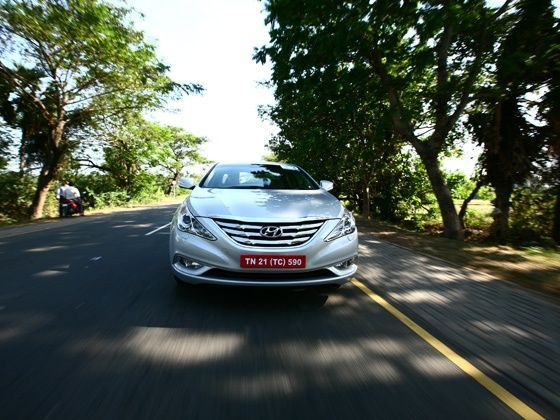
Hyundai is
looking at redefining their fortunes in the entry level premium sedan
segment with the advent of the all new Sonata. In its 6th generation
avatar, the new luxury sedan isn’t just a superior product as compared
to its predecessor, it also stands as testimony to Hyundai’s commitment
to becoming a world class automobile manufacturer and puts to rest a
number of myths associated with the Sonata brand name.
The all new Hyundai Sonata, which incidentally was showcased in India
for the first time at the 2012 Auto Expo in Delhi, promises to be a
segment definer. Globally, the car has won numerous accolades and has
become a vehicle of choice in markets such as North America and Europe.
Now, with its advent in the Indian market, Hyundai Motor India is
definitely looking at changing their fortunes in the entry level luxury
sedan segment. After all, the Sonata’s predecessors have never really
tasted success in this particular market segment.
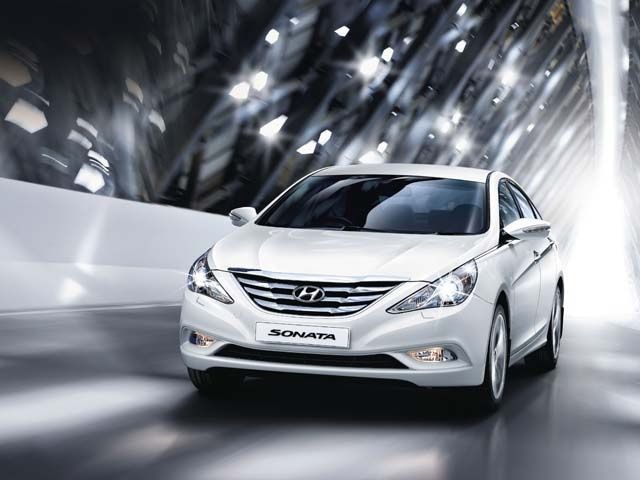
While Hyundai has grown to dominate the small and midsize car
segments, the company has always been clear that they are not limiting
themselves to being a small car manufacturer and that they have their
priorities firmly set on having a plethora of products spread across
product segments where they enjoy a healthy share of the pie in each
individual segment. Having said that, the Sonata has not been able to
cut out a niche for itself and has never pulled in the numbers of
captured a sizeable portion of the market pie. It has suffered on the
account that it didn’t keep pace with what the market demanded at the
time. While it had some virtue in terms of being big, offering decent
interiors, a choice of petrol and diesel engines, it never really had
the oomph factor to take on the competition and this left the last
generation Sonata out of the league.
While all of this was unfolding on Indian soil, the parent company in
Korea was already hard at work in redefining the entire product range.
The goal was to have products that could survive in a global market.
Hyundai’s focus fell on offering products that had a more European feel,
design and finish. Over the past years we have been witness to that
change in the form of the new Verna and the Eon, which all boast of
Hyundai’s new line of thought, but it is the new Sonata that bears the
complete efforts of this change and to state it simply, the 6th
generation Sonata is a product that has the mettle to dominate.
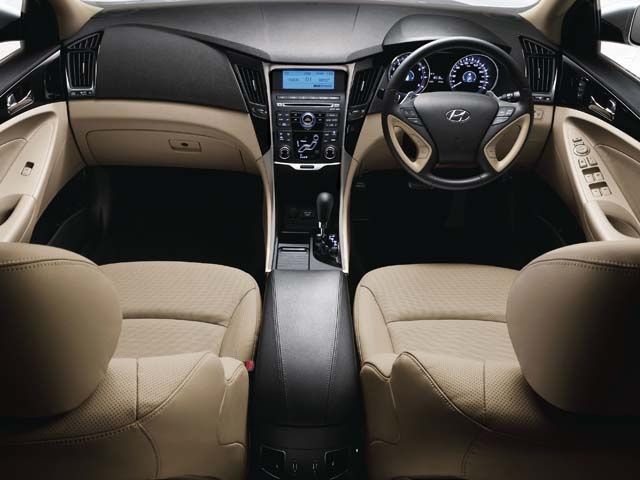
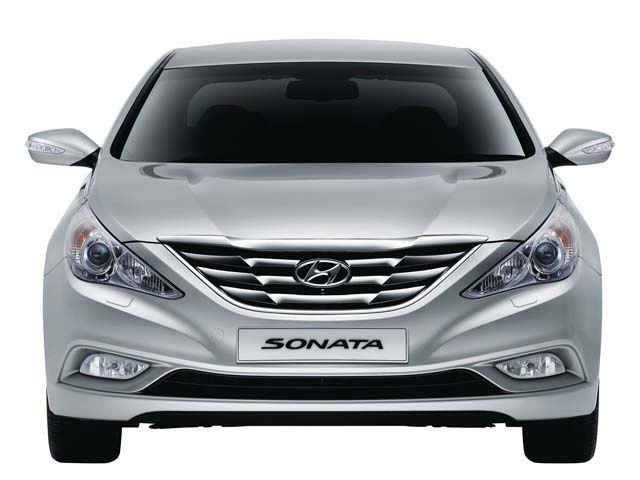
For starters, the new Sonata boasts of Hyundai’s fluidic design
theme. The lines flow to sculpt a striking machine that looks cutting
edge, no matter which angle you view the car from. The large stretched
back headlights housing HID lamps, massive chrome grille which Hyundai
claims is inspired by a waterfall, stylish fog lights and of course the
chiseled hood with character lines flowing into the grille design give
the car a smooth flowing muscular stance. The elements of design carry
over to the side with a well pronounced shoulder line that extends all
the way to the rear and flows flawlessly into the stylish rear tail
light cluster.
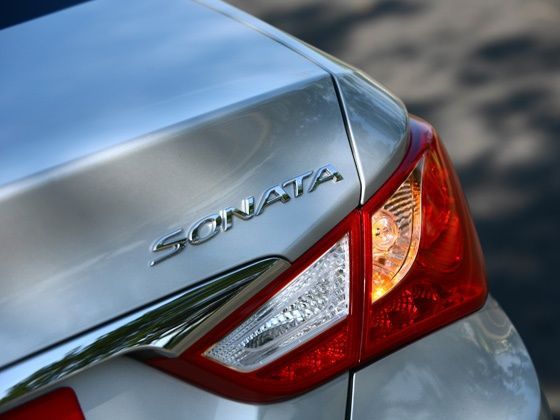
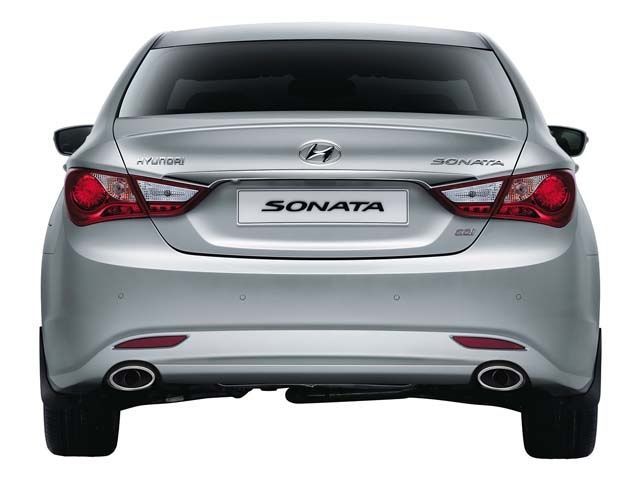
The rear itself is a work of art and the dual exhaust pipes add to
the entire aura of this car. The coupe inspired roofline is a neat touch
to the flowing design and brings together this car in a no-nonsense,
purposeful manner. Its worthy of mention that the new Sonata is bigger
than its predecessor on all accounts and now measures 4,820mm in length,
1,835mm in width,1,490mm in height and has a wheelbase of 2,795mm.
Despite the increase in overall size, the car still manages to look very
agile and light. Riding on neat 215/55 R 17 tubeless tyres shod on
crafted 17 inch alloys that compliment the exterior package, it can
safely be said that the new Sonata scores on all accounts of aesthetic
appeal, a fact that I am sure even the most die hard design critics will
agree upon.

No comments:
Post a Comment